

Kyoto

Konbanwa [con-bon-wah] means “Good Evening.” This shot was taken in the late evening in Yasaka, which is a famous district in Kyoto for both the historic Yasaka Pagoda and it’s old-timey streets, and you can see why. Something about the area just feels like what you imagine “traditional Japan” to look like. During the day it’s bustling with tourists, but in the evening after everything’s closed, the area becomes this calm and serene place to walk around.

Yasaka is a famous district in Kyoto for both the historic Yasaka Pagoda and it’s old-timey streets, and you can see why. Something about the area just feels like what you imagine “traditional Japan” to look like. During the day it’s bustling with tourists, but in the evening after everything’s closed, the area becomes this calm and serene place to walk around.
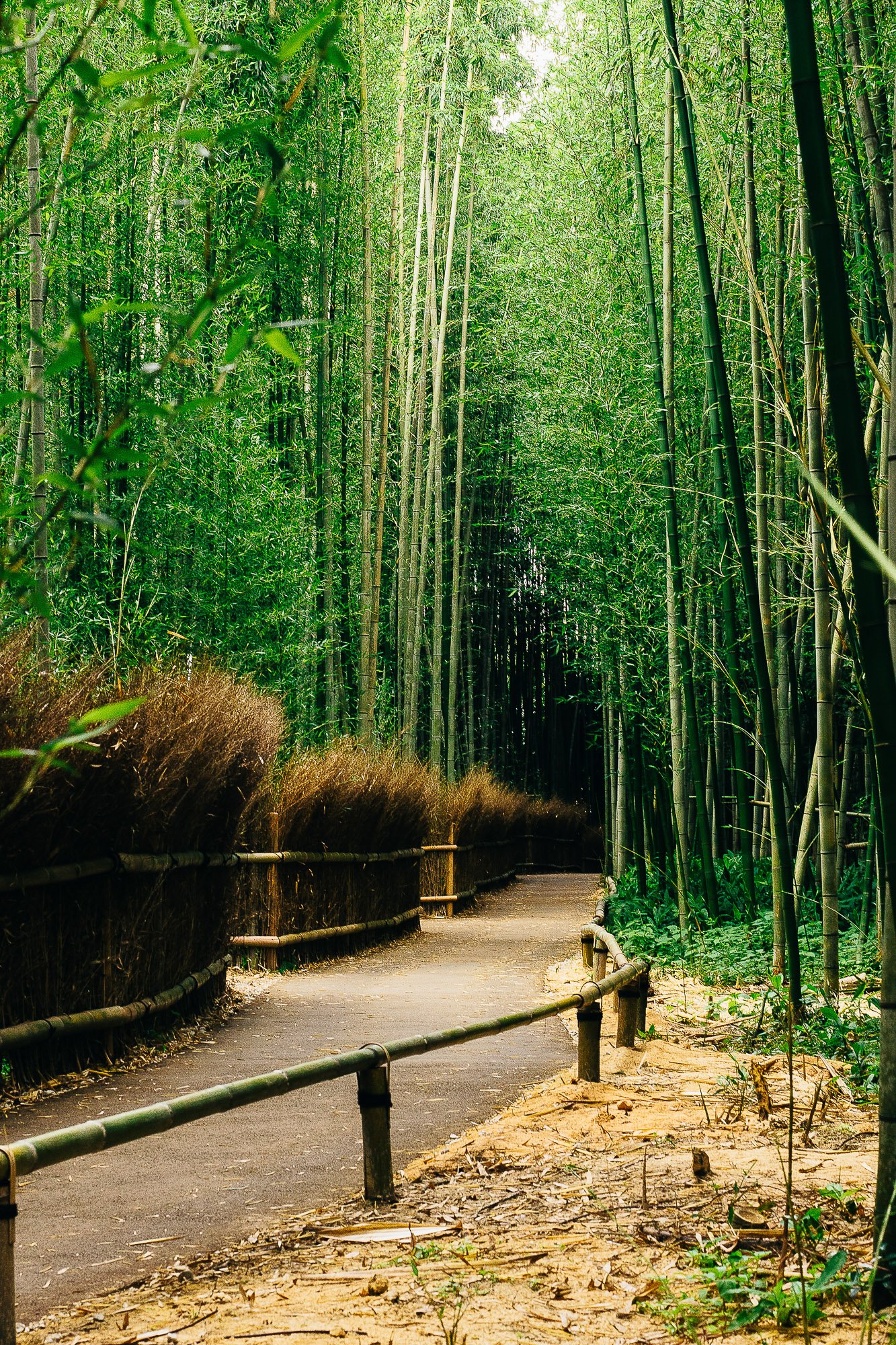
Almost everyone has heard about Kyoto’s Bamboo Forest, where luscious tall bamboo is everywhere and it is an absolutely gorgeous site to behold. But what you don’t know about the Bamboo Forest is how ridiculously small the area is. So take a small area, and pair it with seemingly everyone tourist in the world at once, and you get… an incredibly crowded space. I was 100% unable to get any good picture of the main area of the Bamboo Forest, but I never give up easily, and so I snuck around to a quiet area where I was gifted with this quiet scene.
The neat part is the bamboo is so thick, that even though the busy area is just right around the corner. You can’t hear the hustle and bustle.

The Golden Temple is an absolute masterpiece of Kyoto. But the beauty doesn’t stop there. The temple itself is surrounded by an absolutely stunning garden that has been purposely and meticulously curated to flow with the changing of the Behind and around the ridiculously gorgeous Golden Temple. This photo is just one of many paths that you can take when walking around the temple grounds, and it really is as relaxing as it looks.

Gion is a district in Kyoto that’s renowned for its preservation of traditional Japanese culture. Gion is famous for being one of the last remaining geisha districts in the country. As dusk falls, the narrow streets come alive with the graceful presence of geishas and maikos, elegantly making their way to tea houses and traditional establishments. The district gives off an old-world charm with its historic wooden machiya houses and charming teahouses. It really embodies the ‘Ancient Japan’ vibes that you see in movies.

Probably one of the most famous temples in all of Kyoto. The Fushimi-Inari Taisha is most well known for it’s thousand red torii gates. Gates have been donated by businesses overtime wishing for good luck and prosperity since the 16th century. The gates lead you on a path through the forest scenery of the Inari Mountain.

An Izakaya is essentially what we in North America call a bar or a pub. Except the food is 100x better and the alcohol is surprisingly cheap. Charcoal seared meat skewers called ‘yakitori’ is practically the staple of a good Izakaya. Other foods include Japanese fried chicken called ‘karaage’ [kara-a-geh], yakisoba which is stir-fried noodles, and many other small dishes that all taste amazing.
This one Izakaya in particular stood out to me. Most Izakaya’s are in next to other Izakaya’s. Like a tiny neighbourhood of bars and restaurants with flashy lights everywhere. But this place stood out. It’s on a small road, nearby a small train station, and surrounded by houses and businesses that are all closed in the evening. It’s a really quiet street with not a lot of foot traffic. But amidst the evening darkness, there’s a warm glow coming from halfway down the road. And it’s this Izakaya. As you get closer you hear the cheers and jeers from the happy patrons inside.
It’s these places out in the middle of nowhere that tend to have the best and this Izakaya was no exception. The owner, despite speaking next to no English, was incredibly friendly and welcome, as were the other patrons. It was one of my favourite dining and drinking experiences in Japan.
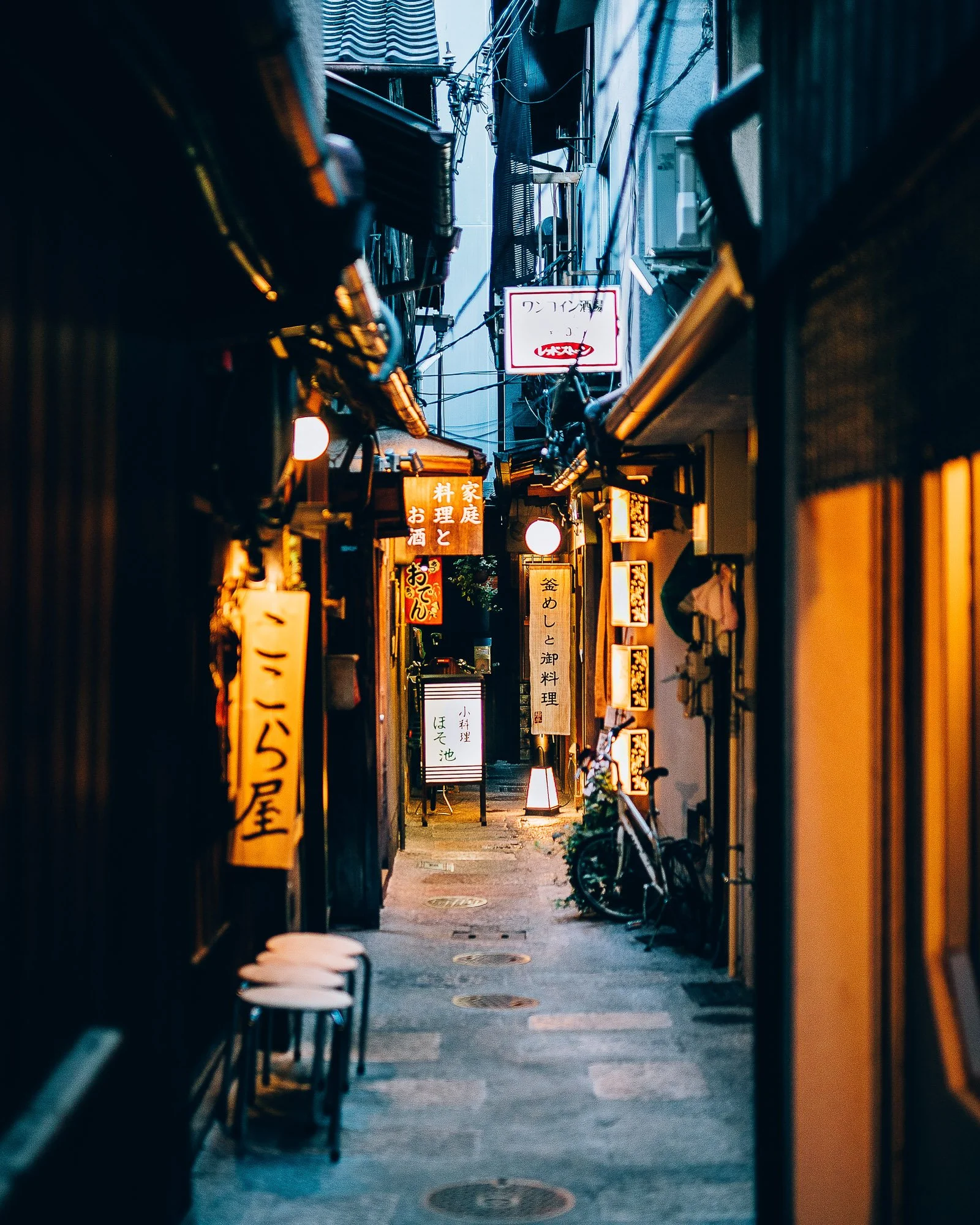
I’ve always loved these tiny alleyways in Japan. They’re barely wide enough to fit 2 people side by side, they’re dimly lit, and you’ll find stools alongside the alleyway walls for patrons waiting to go inside. The alleys are tight and jagged, with wires everywhere. If it weren’t for the warm glow of the lights, it would probably be a little creepy. But those lights make it a warm and comforting place to be as you hear the cheers and laughter from the businesses lining the alley.

I’ve always loved these tiny alleyways in Japan. They’re barely wide enough to fit 2 people side by side, they’re dimly lit, and you’ll find stools alongside the alleyway walls for patrons waiting to go inside. When I saw this Chochin lantern hanging there, I thought “This is the perfect Japanese alleyway”. Chochin lanterns are a traditional symbol of Japan's rich cultural heritage. They add a warm glow to the country's streets. Crafted from washi paper stretched over a bamboo frame, these lanterns are characterized by their cylindrical shape and delicate beauty. Historically used as portable light sources, chochin lanterns have evolved into charming decorative elements, often adorning restaurants, izakayas, and festivals.
The Golden Temple, also known as Kinkaku-ji, is an enchanting and iconic Buddhist temple nestled within the serene city of Kyoto, Japan. This stunning architectural masterpiece stands majestically beside a tranquil pond, reflecting its golden facade in the shimmering waters. Originally built in the 14th century as a private villa, it was later transformed into a temple by shogun Ashikaga Yoshimitsu. The temple's top two floors are adorned with shimmering gold leaf, earning it the nickname "Golden Pavilion." Surrounded by meticulously landscaped gardens and lush greenery, the Golden Temple offers visitors a profound sense of tranquility and spirituality, making it a must-visit destination for those seeking an awe-inspiring glimpse into Japan's rich cultural heritage.
Konbanwa [con-bon-wah] means “Good Evening.” This shot was taken in the late evening in Yasaka, which is a famous district in Kyoto for both the historic Yasaka Pagoda and it’s old-timey streets, and you can see why. Something about the area just feels like what you imagine “traditional Japan” to look like. During the day it’s bustling with tourists, but in the evening after everything’s closed, the area becomes this calm and serene place to walk around.