

Japan
The Senso-ji Five-Story Pagoda is a historic pagoda located within the Senso-ji Temple complex in Asakusa, Tokyo, Japan. The temple is one of the most popular tourist attractions in Tokyo and is widely regarded as one of the oldest and most significant Buddhist temples in the city.
The Five-Story Pagoda was originally constructed in the 7th century and has undergone several reconstructions over the years, with the current structure dating back to 1973. The pagoda stands at a height of 53.32 meters (175 feet) and is decorated with intricate carvings and ornate details. It is also illuminated at night, creating a stunning and mystical sight.
The pagoda is considered to be a symbol of the Senso-ji Temple and is a popular attraction for visitors to the area. It is believed to be a powerful spiritual site that can help bring good luck, health, and success to those who visit and offer their prayers and wishes.
Yes, this is the same shot as the daytime one, I just came back later.

Maybe I watch too many animes and Japanese dramas, but Japan has a lot of these cute, quaint, tiny shops and cafes. And something about them is just really… cute and cozy. I can’t explain it. Then add in a person riding by slowly on a bicycle, and you get “small Japanese neighbourhood” vibes.

To say that Tokyo is a dense city is a massive understatement. There’s an estimated 6500 people per square kilometer. As such, you need enough buildings to house that many people and their work offices. What you get is a massive sea of buildings in all directions that never seems to end.
You know how when you’re really high up, you can see the edge of a city? You can’t with Tokyo. It’s just and endless horizon of buildings.

To say that Tokyo is a dense city is a massive understatement. There’s an estimated 6500 people per square kilometer. As such, you need enough buildings to house that many people and their work offices. What you get is a massive sea of buildings in all directions that never seems to end.
You know how when you’re really high up, you can see the edge of a city? You can’t with Tokyo. It’s just and endless horizon of buildings.

Mount Fuji. One the most famous, if not the most famous volcano in the world. It's the highest peak in Japan, and has been in thousands of writings, paintings, and other artwork over the centuries. It is very much a point of pride for Japan and as symbolic to them as their own national flag. So it was a wonder then as I watched the sun slowly set next to Mt Fuji, these two Japanese women next to me were literally crying in awe. Tears streaming down their face, as they whispered to themselves "It's so beautiful."
I mean, it felt a bit dramatic but I guess I can see how they had that reaction.

The Shibuya Scramble Crossing is one of the most famous spots in Japan, if not in the world. It is the busiest crosswalk in the world, by a massive margin. Literal thousands of pedestrian cross it at each light, or every 2 minutes. During peak hours, it is estimated that more than 3,000 people cross at once.
A survey done back in 2014 estimated that roughly 260,000 people cross per day on the weekdays, and an estimated 390,000 people cross on weekend days. Some experts estimate that on specialty days where there may be events going on, the pedestrian count could reach as high as 500,000 pedestrians in one day. There’s an estimated 1,500,000 pedestrians who cross this intersection every single week. That’s more than the entire popular of Edmonton!

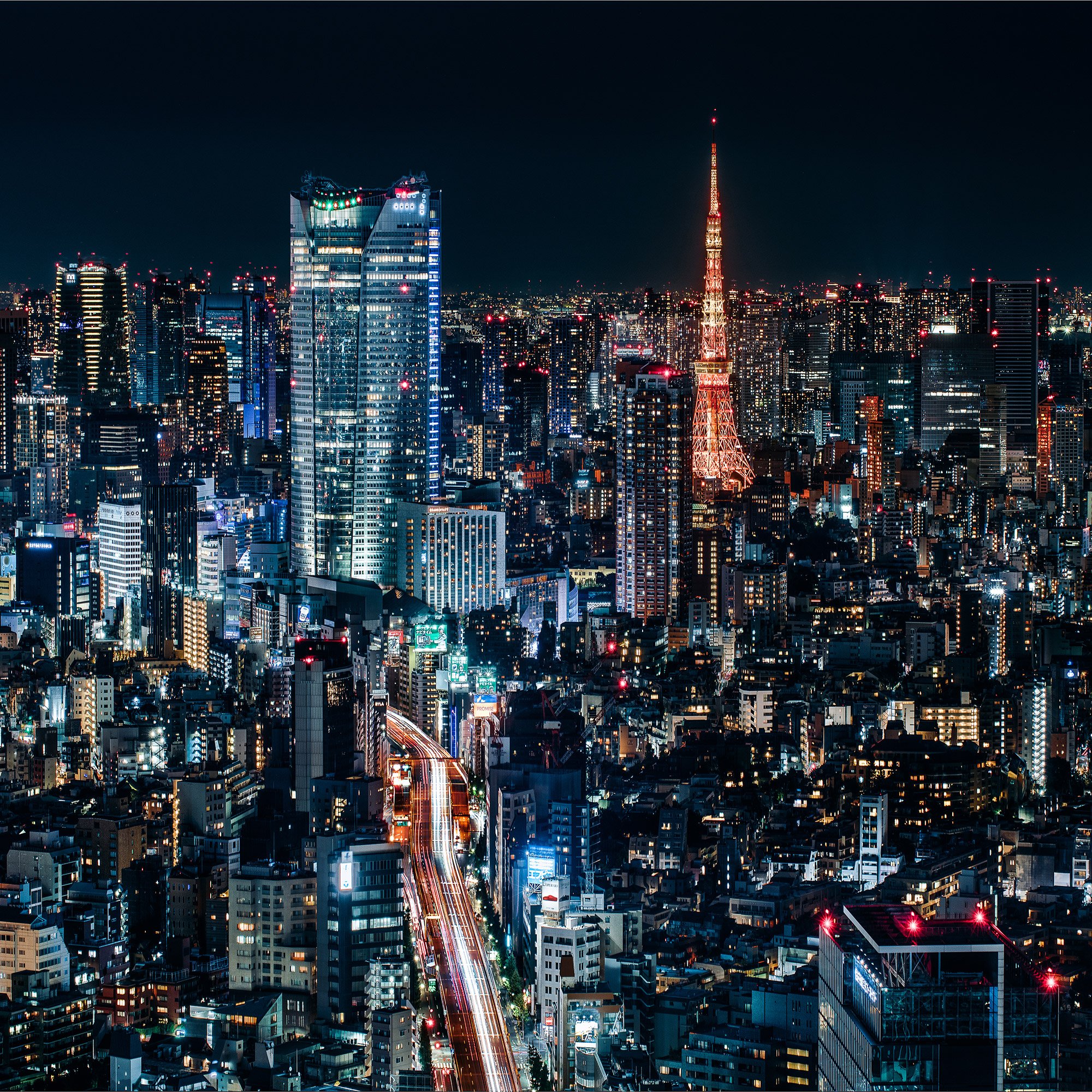
I’ve always loved this image. Not only because it looks absolutely nutty, but when I slow down to think about it, it’s a little bit mindblowing. On the right, we have the Tokyo Tower, which is heavily inspired by Paris’ Eiffel Tower. I never thought that the Tokyo Tower was all that impressive because it didn’t look very big. I thought it looked even smaller than the Eiffel Tower when in reality it’s actually bigger. It’s so big in fact, that it’s the second tallest structure in all of Japan and is taller than the Chrysler Building in New York. But in photos and videos, I always thought it looked so short, whereas the Eiffel Tower looked so tall.
The reason is simply because the Eiffel Tower is surrounded by short buildings, and the Tokyo Tower is surrounded by [at least by Western standards] tall buildings, which makes the Tokyo Tower’s height feel less than it is.
Then there’s the massive building on the left, which is the Roppongi Hills building. If you think about every surrounding building to be your average office tower in any North American city skyline, then that Roppongi Hills building is literally gigantic. It’s only just a few meters shorter than the Stantec Building in Edmonton, AB, which is the tallest structure in Western Canada.
It’s kind of crazy to think about.

The Biliken is the “God of Thing-As-They-Ought-To-Be” and also a sort of unofficial mascot for the city of Osaka. Biliken can be seen all around Osaka and various other parts of Japan, bringing luck and prosperity to restaurants, shops, and other attractions. People can rub the Bilikens feet and offer a coin donation for good luck. Despite being a God in Japan, his design was actually created by an American artist from Kansas City in the early 1900s and is actually the mascot for some St Louis schools.
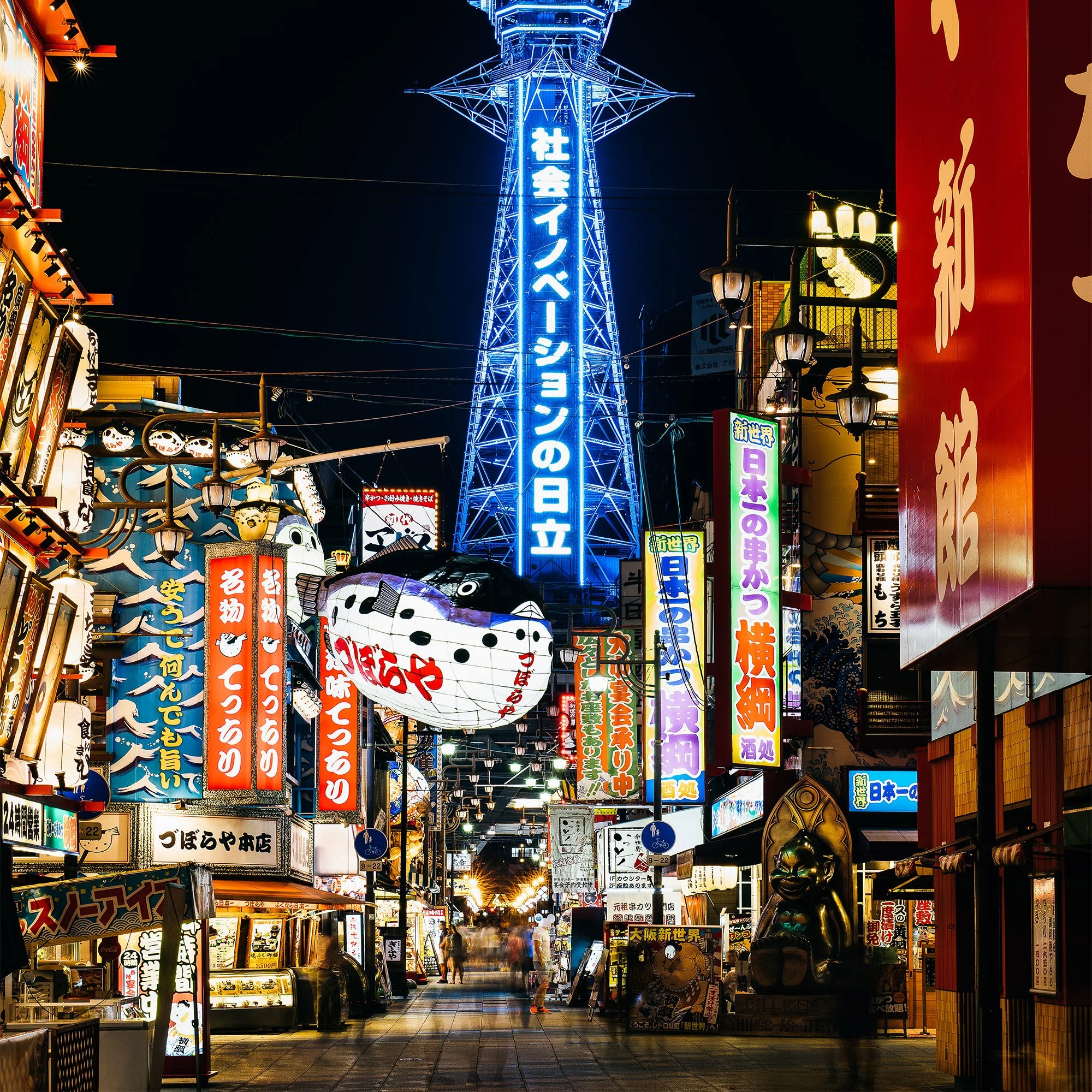
There’s a famous Biliken inside the Tsutenkaku Tower that people visit all the time for luck. But just outside the tower, amongst the sea of restaurants sits this tiny unassuming Tsutenkaku Tower shrine. I imagine to bring luck to the area of shops and restaurants.

Shinsekai was originally developed in 1912 as a sort of World-of-the-Future (Shinsekai literally means “New World”) with New York’s Coney Island and Paris’ Eiffel Tower as the two primary areas of inspiration for it’s design. The centrepiece of the entire area is the Tsutenkaku (Tower Reaching Heaven) Tower which originally looked the Eiffel Tower had a baby with the Arc de Triumph. It’s since developed into it’s own unique look.
The area today is much like any other nightlife tourist district in Japan, with bright lights and colourful signage everywhere advertising shops and restaurants. One of the most well known displays here is the giant lit up blowfish, or fugu which is a fish that’s famous for, oddly, being toxic to eat. So it must be very skillfully prepared or else you may actually die. Fun stuff, eh?

Shinsekai was originally developed in 1912 as a sort of World-of-the-Future (Shinsekai literally means “New World”) with New York’s Coney Island and Paris’ Eiffel Tower as the two primary areas of inspiration for its design. The centrepiece of the entire area is the Tsutenkaku (Tower Reaching Heaven) Tower which originally looked the Eiffel Tower had a baby with the Arc de Triumph.
The area today is much like any other nightlife tourist district in Japan, with bright lights and colourful signage everywhere advertising shops and restaurants, it’s a beautiful sight to behold. Although some residents of Osaka consider it to be a dangerous area due to heavy criminal activity in the decades following WWII, it’s still incredibly safe by North American standards, since Japan is a very safe country overall.

Nunobiki Falls is considered to be one of 3 “Greatest Divine Falls” in Japan, and is historically significant in Japanese arts and literature. The falls is in 4 parts, and the very first is the upper half of the image, in an area called Ontaki. The second part of the falls, on the bottom half is called Mentaki.
[I learned that the bottom of the falls is even more gorgeous, and I guess I missed it last time. So… I need to go back…]
Nunobiki Falls is considered to be one of 3 “Greatest Divine Falls” in Japan, and is historically significant in Japanese arts and literature. The falls is in 4 parts, and the very first part starts here, in what this tiny fall and pond area called Ontaki.
[I learned that the bottom of the falls is even more gorgeous, and I guess I missed it last time. So… I need to go back…]
Inside of Osaka’s iconic and famous Dotonburi district. Aside for its giant wall of LED advertisements, in particular the running Glico man. There’s the equally famous giant animatronic crab of the Kani Doraku restaurant, a franchise of restaurants that specialize in… well… crab.
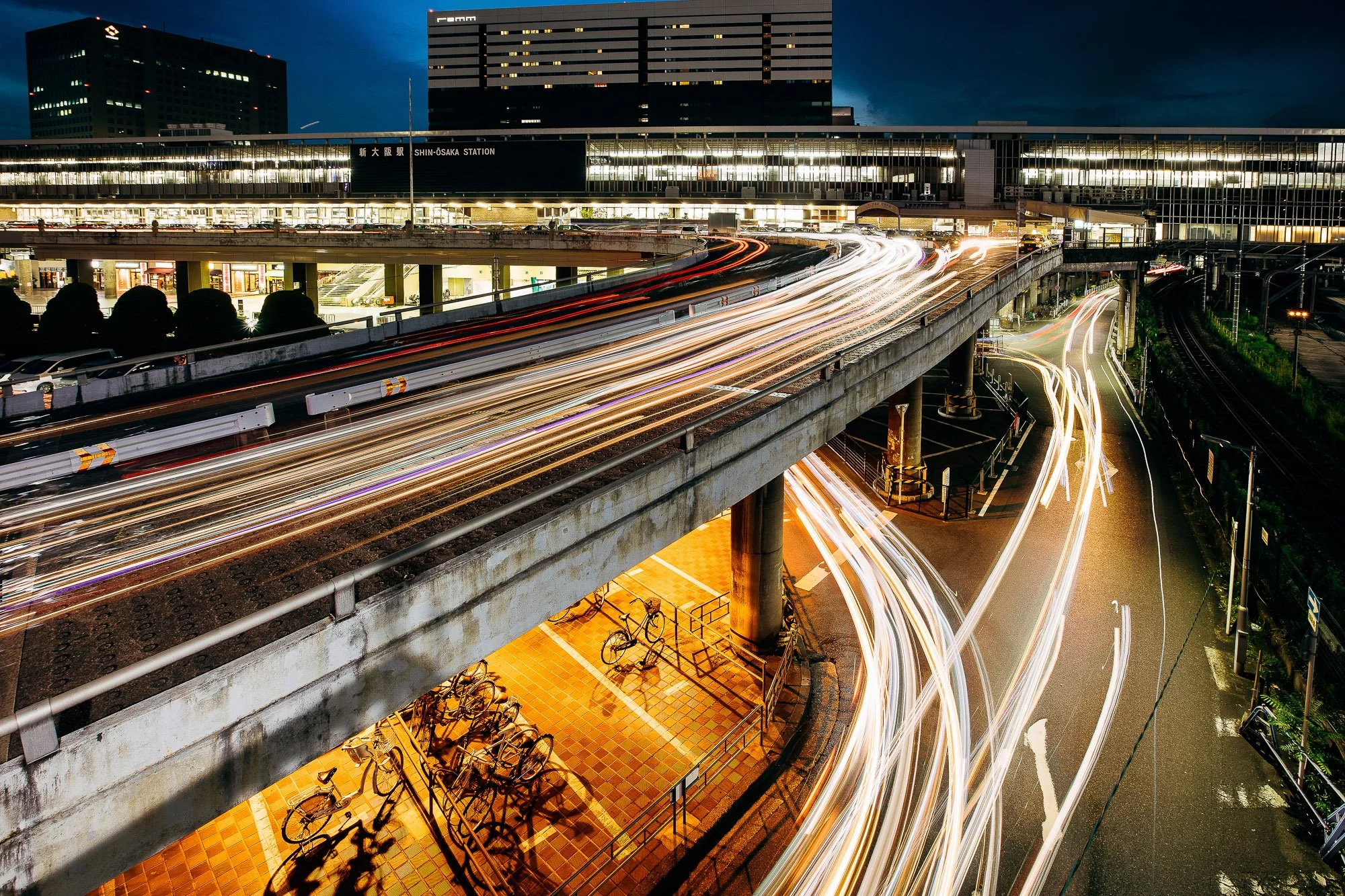
A person cannot go to Japan without reading, talking, or even thinking about the trains. Afterall, Japan is home to the famous Shinkansen, or ‘Bullet Train’ as they were the first country to use bullet trains, with great success no less. So as you can imagine, trains are a pretty big deal in Japan. They have absolutely massive train hubs that are essentially a mall that can also take you to literally anywhere in the city, or even the country. Shin-Osaka Station is the primary hub for Osaka. It also hubs multiple shops, restaurants, and even hotels. You could stay in the hotel at the station and then have excursions to anywhere you’d like to go via the hub!
On an unrelated side note, the best ramen I’ve ever had anywhere, including in all of Japan, was a ramen shop in Shin-Osaka Station. If only I could remember which one it was because there’s at least 3 ramen shops in there…

A person cannot go to Japan without reading, talking, or even thinking about the trains. Afterall, Japan is home to the famous Shinkansen, or ‘Bullet Train’ as they were the first country to use bullet trains, with great success no less. So as you can imagine, trains are a pretty big deal in Japan. They have absolutely massive train hubs that are essentially a mall that can also take you to literally anywhere in the city, or even country.
This one’s for the train lovers out there.

Osaka’s iconic and famous Dotonburi district. Known for its giant wall of LED advertisements, in particular the running Glico man. It has a very high-tech neo-city vibe to it. Despite the bright lights and vibrant colours though, the area is actually quite calm and peaceful. It’s crowded and busy but not loud. And of course, there is some amazingly good food just around the corner.

As the sun rises and sets in Osaka, the train stations transform into captivating theaters of human drama during rush hour. Thousands of commuters gracefully dance through the platforms, each with their unique rhythm and purpose. The stations come alive with a symphony of hurried footsteps, bustling chatter, and the occasional hum of a passing train. Amidst the orchestrated chaos, stories unfold like vivid scenes on a cinematic canvas - tired salarymen with coffee in hand, students engrossed in textbooks, and families setting off on daily adventures. Faces filled with anticipation, determination, and the occasional glimpse of weariness, mirror the city's heartbeat, painting a vivid reflection of its vibrant rhythm.

One of Japan’s most famous landmarks is the Osaka Castle. Originally completed in 1597, the castle had been destroyed and restored multiple times over the centuries since. Mainly due to war, but a few times due to fires. The most recent restoration of the castle was completed in 1997, this time with concrete, I imagine with the hopes that it doesn’t catch on fire anymore. The interior is now a modern museum that’s open to the public where you can learn all about the history of the castle and its role in Japanese history.

The Senso-ji Five-Story Pagoda is a historic pagoda located within the Senso-ji Temple complex in Asakusa, Tokyo, Japan. The temple is one of the most popular tourist attractions in Tokyo and is widely regarded as one of the oldest and most significant Buddhist temples in the city.
The Five-Story Pagoda was originally constructed in the 7th century and has undergone several reconstructions over the years, with the current structure dating back to 1973. The pagoda stands at a height of 53.32 meters (175 feet) and is decorated with intricate carvings and ornate details. It is also illuminated at night, creating a stunning and mystical sight.
The pagoda is considered to be a symbol of the Senso-ji Temple and is a popular attraction for visitors to the area. It is believed to be a powerful spiritual site that can help bring good luck, health, and success to those who visit and offer their prayers and wishes.

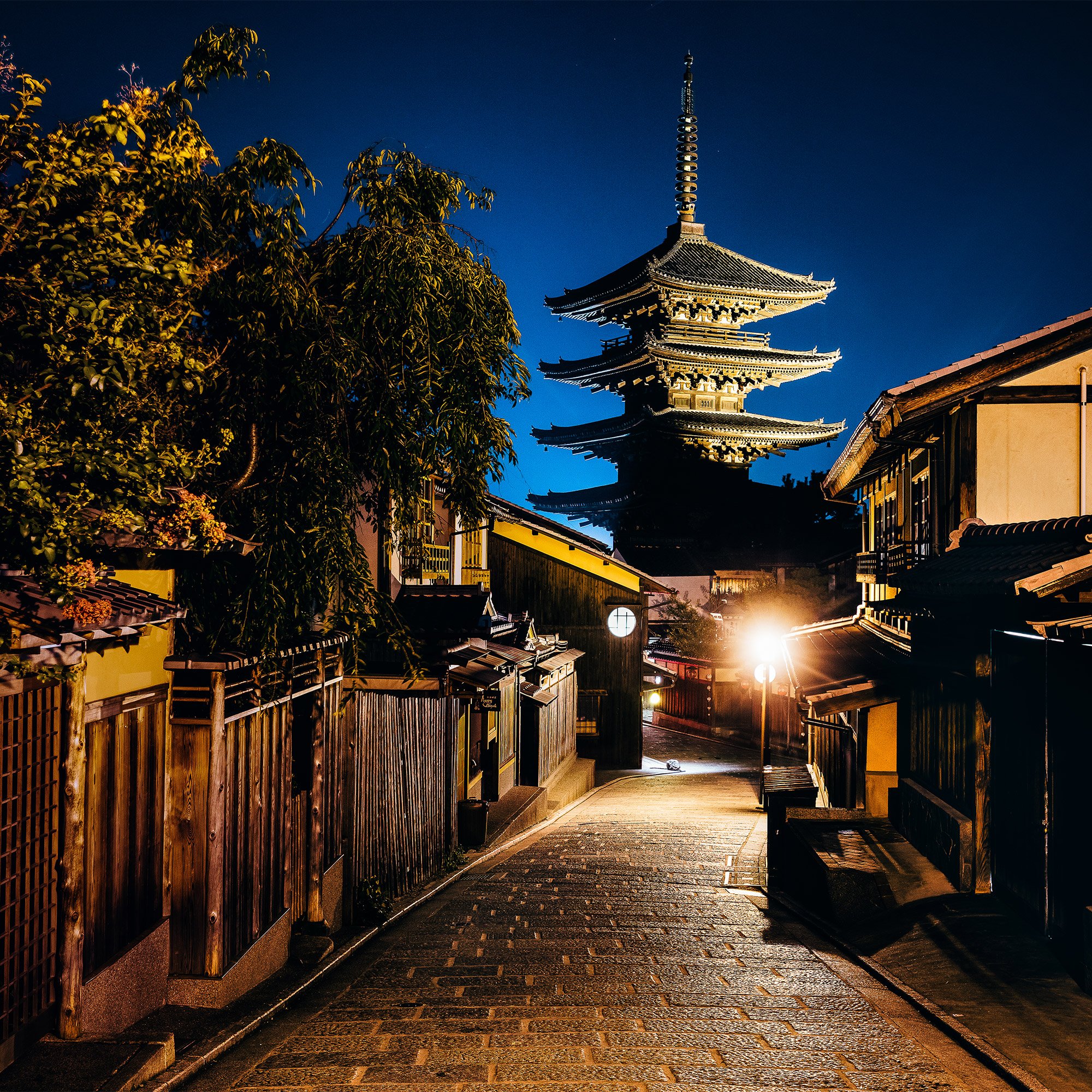
Konbanwa [con-bon-wah] means “Good Evening.” This shot was taken in the late evening in Yasaka, which is a famous district in Kyoto for both the historic Yasaka Pagoda and it’s old-timey streets, and you can see why. Something about the area just feels like what you imagine “traditional Japan” to look like. During the day it’s bustling with tourists, but in the evening after everything’s closed, the area becomes this calm and serene place to walk around.

Yasaka is a famous district in Kyoto for both the historic Yasaka Pagoda and it’s old-timey streets, and you can see why. Something about the area just feels like what you imagine “traditional Japan” to look like. During the day it’s bustling with tourists, but in the evening after everything’s closed, the area becomes this calm and serene place to walk around.
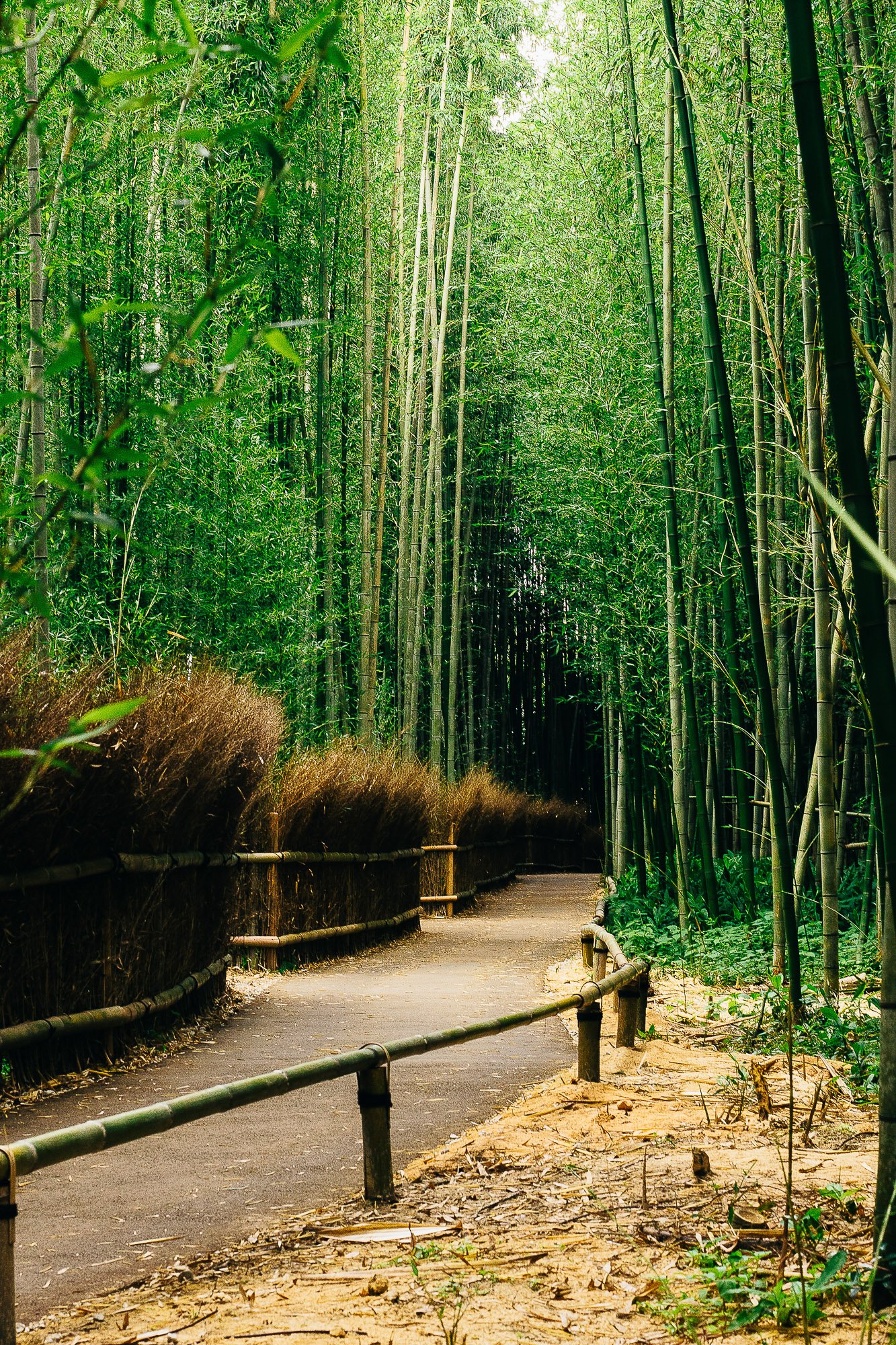
Almost everyone has heard about Kyoto’s Bamboo Forest, where luscious tall bamboo is everywhere and it is an absolutely gorgeous site to behold. But what you don’t know about the Bamboo Forest is how ridiculously small the area is. So take a small area, and pair it with seemingly everyone tourist in the world at once, and you get… an incredibly crowded space. I was 100% unable to get any good picture of the main area of the Bamboo Forest, but I never give up easily, and so I snuck around to a quiet area where I was gifted with this quiet scene.
The neat part is the bamboo is so thick, that even though the busy area is just right around the corner. You can’t hear the hustle and bustle.

The Golden Temple is an absolute masterpiece of Kyoto. But the beauty doesn’t stop there. The temple itself is surrounded by an absolutely stunning garden that has been purposely and meticulously curated to flow with the changing of the Behind and around the ridiculously gorgeous Golden Temple. This photo is just one of many paths that you can take when walking around the temple grounds, and it really is as relaxing as it looks.

Gion is a district in Kyoto that’s renowned for its preservation of traditional Japanese culture. Gion is famous for being one of the last remaining geisha districts in the country. As dusk falls, the narrow streets come alive with the graceful presence of geishas and maikos, elegantly making their way to tea houses and traditional establishments. The district gives off an old-world charm with its historic wooden machiya houses and charming teahouses. It really embodies the ‘Ancient Japan’ vibes that you see in movies.

Probably one of the most famous temples in all of Kyoto. The Fushimi-Inari Taisha is most well known for it’s thousand red torii gates. Gates have been donated by businesses overtime wishing for good luck and prosperity since the 16th century. The gates lead you on a path through the forest scenery of the Inari Mountain.

An Izakaya is essentially what we in North America call a bar or a pub. Except the food is 100x better and the alcohol is surprisingly cheap. Charcoal seared meat skewers called ‘yakitori’ is practically the staple of a good Izakaya. Other foods include Japanese fried chicken called ‘karaage’ [kara-a-geh], yakisoba which is stir-fried noodles, and many other small dishes that all taste amazing.
This one Izakaya in particular stood out to me. Most Izakaya’s are in next to other Izakaya’s. Like a tiny neighbourhood of bars and restaurants with flashy lights everywhere. But this place stood out. It’s on a small road, nearby a small train station, and surrounded by houses and businesses that are all closed in the evening. It’s a really quiet street with not a lot of foot traffic. But amidst the evening darkness, there’s a warm glow coming from halfway down the road. And it’s this Izakaya. As you get closer you hear the cheers and jeers from the happy patrons inside.
It’s these places out in the middle of nowhere that tend to have the best and this Izakaya was no exception. The owner, despite speaking next to no English, was incredibly friendly and welcome, as were the other patrons. It was one of my favourite dining and drinking experiences in Japan.
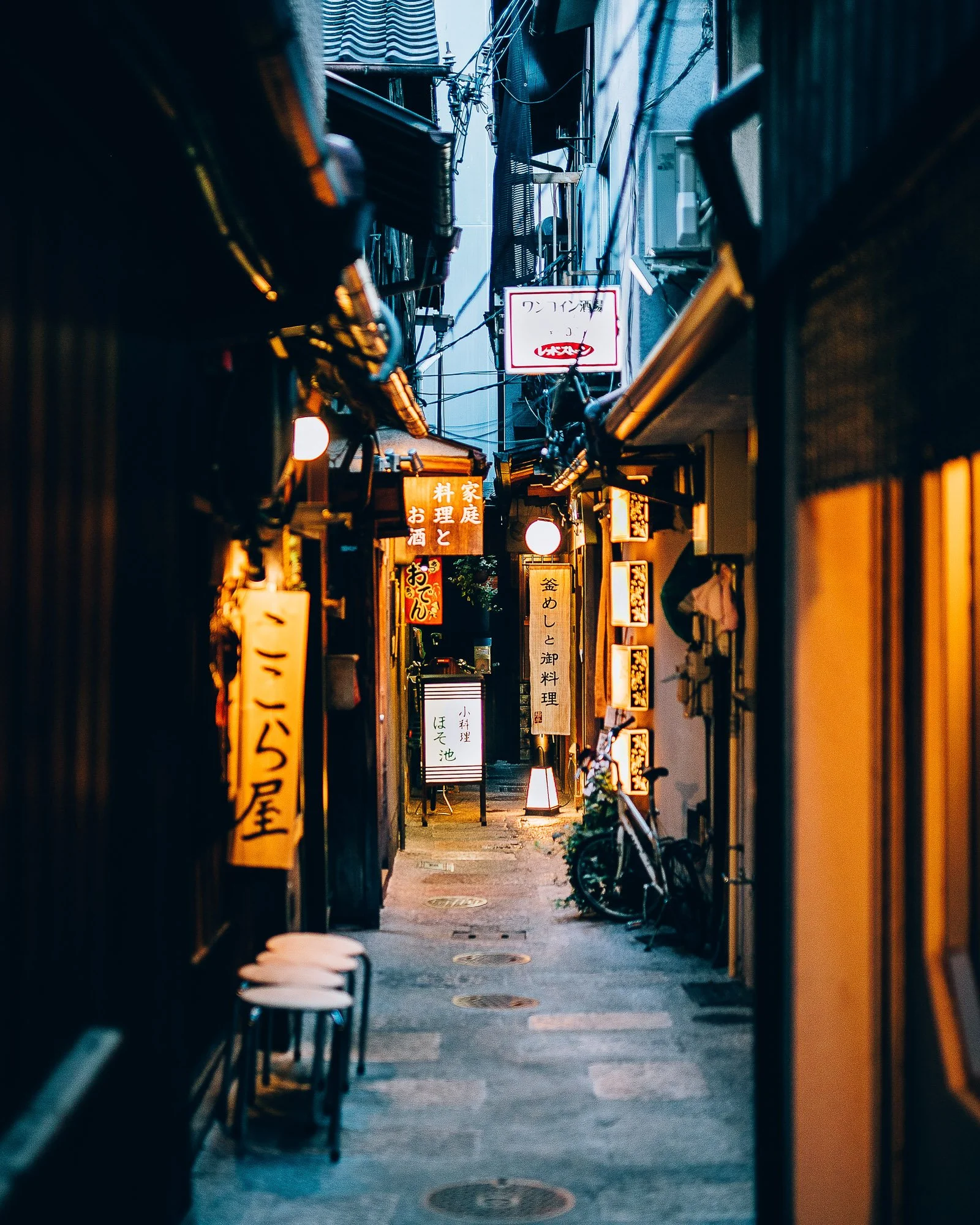
I’ve always loved these tiny alleyways in Japan. They’re barely wide enough to fit 2 people side by side, they’re dimly lit, and you’ll find stools alongside the alleyway walls for patrons waiting to go inside. The alleys are tight and jagged, with wires everywhere. If it weren’t for the warm glow of the lights, it would probably be a little creepy. But those lights make it a warm and comforting place to be as you hear the cheers and laughter from the businesses lining the alley.

I’ve always loved these tiny alleyways in Japan. They’re barely wide enough to fit 2 people side by side, they’re dimly lit, and you’ll find stools alongside the alleyway walls for patrons waiting to go inside. When I saw this Chochin lantern hanging there, I thought “This is the perfect Japanese alleyway”. Chochin lanterns are a traditional symbol of Japan's rich cultural heritage. They add a warm glow to the country's streets. Crafted from washi paper stretched over a bamboo frame, these lanterns are characterized by their cylindrical shape and delicate beauty. Historically used as portable light sources, chochin lanterns have evolved into charming decorative elements, often adorning restaurants, izakayas, and festivals.

The Golden Temple, also known as Kinkaku-ji, is an enchanting and iconic Buddhist temple nestled within the serene city of Kyoto, Japan. This stunning architectural masterpiece stands majestically beside a tranquil pond, reflecting its golden facade in the shimmering waters. Originally built in the 14th century as a private villa, it was later transformed into a temple by shogun Ashikaga Yoshimitsu. The temple's top two floors are adorned with shimmering gold leaf, earning it the nickname "Golden Pavilion." Surrounded by meticulously landscaped gardens and lush greenery, the Golden Temple offers visitors a profound sense of tranquility and spirituality, making it a must-visit destination for those seeking an awe-inspiring glimpse into Japan's rich cultural heritage.
Konbanwa [con-bon-wah] means “Good Evening.” This shot was taken in the late evening in Yasaka, which is a famous district in Kyoto for both the historic Yasaka Pagoda and it’s old-timey streets, and you can see why. Something about the area just feels like what you imagine “traditional Japan” to look like. During the day it’s bustling with tourists, but in the evening after everything’s closed, the area becomes this calm and serene place to walk around.